On October 16, TechRadar covered a survey of 201 US business owners paid for by Bluehost. The big news was that 53% of small businesses used AI website builders instead of hiring a developer, saving about $850 and 32 hours on average. In the same article, numbers from Freelancer.com showed WordPress job listings down 58% since the second quarter of 2024.
A 201-person survey with a nearly 7-point margin of error, paid for by a hosting company that sells AI tools, deserves a raised eyebrow. Still, the direction is real. People are using AI to build websites.
If you look past the headline, though, the survey's own numbers tell a different story. Only 9% of those business owners published what the AI built without changing it. The other 91% had to step in and fix the output first. And when asked which tasks they would least want to hand over to AI, 21% pointed to hosting and domain setup.
Le and I started RogerLe.com in October 1996, so we have been doing this for 30 years. Both of us are not salespeople, and we don't know how to sell anything at all, yet we still have clients who have been with us for decades. I use AI every day now to write code and build pages. It is great for getting past a blank screen, and it does in five minutes what used to take an afternoon of typing HTML and CSS.
What AI does not do is the unglamorous work that keeps a business online. It doesn't set up your DNS, SPF, and DKIM records so your invoices actually reach your customer's inbox instead of their spam folder. It doesn't test if your backups actually restore. And it certainly doesn't keep your server alive when things go wrong.
Just look at what happened in the hosting world during the exact same week that Bluehost published their survey.
First, on October 12, The Hacker News reported that attackers from 63 different IP addresses were actively exploiting a 10.0 critical flaw in the Bricksforge WordPress plugin (CVE-2026-85097). A 10.0 is as bad as the score gets. The attackers did it without even needing a password, by uploading a file that looked like a normal GIF image, except it had PHP code hidden inside it. Once uploaded, the server ran the code and handed the site over to the attacker.
If a business owner built their WordPress site with an AI tool and walked away, they were wide open until they updated the plugin (to version 3.1.8.10 or 4.0.1). On our servers, that whole class of attack fails before the plugin is even patched. We run AlmaLinux with nginx and PHP-FPM, and I configure nginx so PHP is never allowed to execute inside the wp-content/uploads folder. If you upload a GIF with PHP inside it, nginx just serves it as a broken picture. It never touches the PHP engine.
Second, on Friday, October 16, AlmaLinux published patched kernels for CVE-2026-99999, a bug called PwnEscape. It is a flaw in the Linux kernel's IPv4 networking stack, not even in the virtualization software itself, and it lets a guest virtual machine read host memory, crash the physical machine, or run code as root on the host. Red Hat warned that a local attacker could trigger it too, so every machine was in scope, and there was no workaround.
Because it was Friday, the fixed kernels for AlmaLinux 8, 9, and 10 were only in the testing repository. An AI website builder isn't going to help you there. I spent my evening migrating virtual machines so nothing would drop, enabling the testing repo just long enough to pull the new kernel packages, disabling the testing repo again so the servers wouldn't pull unstable software later, rebooting each machine, and checking uname -r to confirm the new kernel was running. Even our old legacy AlmaLinux 8 server had to be patched and rebooted (a good reminder of what it actually costs in time to keep old servers around).
We see the exact same shift happening out on the road. After we sold our apartment in Caldas da Rainha, Le, Jolie (our toy poodle, who still thinks she is a human), and I went back to living full-time in our motorhome. We have driven through 24 European countries so far, and you notice very quickly how towns are changing the way they handle travelers.
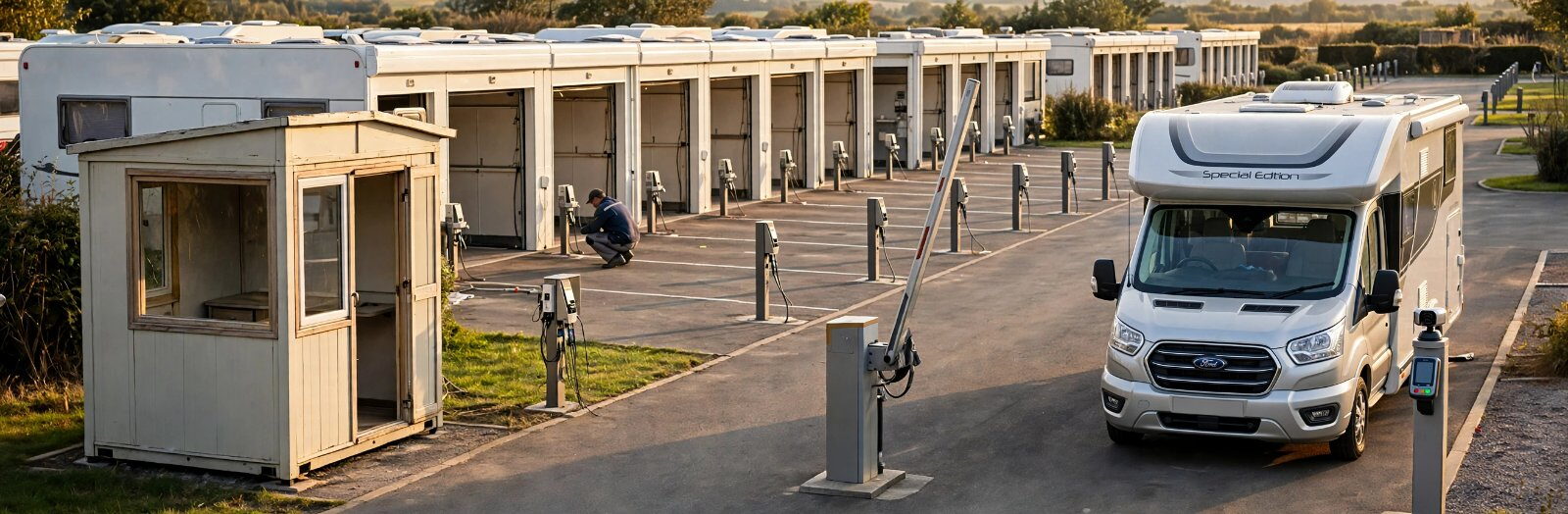
On October 17, Camping-Car Magazine reported that the town of Bayeux, up in Normandy, closed its two old motorhome parking areas and replaced them with a single 25-bay aire. There is no attendant sitting in a little wooden hut taking cash. You drive up to a barrier that reads your license plate with a camera, tap your bank card to pay €14.40 for 24 hours (after the first 12 hours), and pull into a bay with water and electricity, as long as your motorhome is under 8 meters.
Meanwhile, two days earlier on October 15, Luxembourg's economy ministry announced a program called "Destination Camper Park(ing)" to help towns build the country's first official network of motorhome aires, after police had to deal with nine reports of illegal camping around the Haute-Sûre lake this year. Interestingly, the ministry will pay to build the parking bays and service points, but they explicitly refused to fund public toilets at the sites because of what it costs to clean and maintain them.
When you put the Bluehost survey next to Bayeux and Luxembourg, it is the same story. Automation is not replacing the whole industry. It is replacing the routine middle tier.
In Bayeux, a camera and a credit card terminal replaced the person who used to hand out paper tickets at the gate. On the web, AI is replacing the freelancer who charged $850 to install a WordPress template, pick three colors, and paste in the "About Us" text.
What automation cannot replace is the infrastructure underneath. In Bayeux and Luxembourg, somebody still has to pave the bays, wire the 16-amp electrical hookups, keep the water running in winter, and fix the barrier when it gets stuck. On the web, somebody still has to lock down nginx, manage the DNS, and patch the Linux kernel on a Friday night.
Honestly, after 30 years of building and hosting sites, I am glad AI is taking over the basic page building. It saves us all three weeks of emailing back and forth about whether the logo should be ten pixels bigger, and leaves me with the work that actually keeps the lights on.